By Tricia Moxey, Trustee
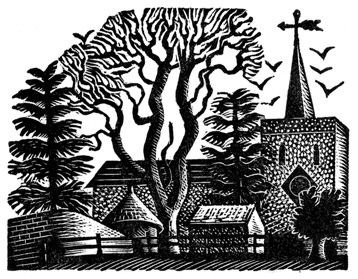
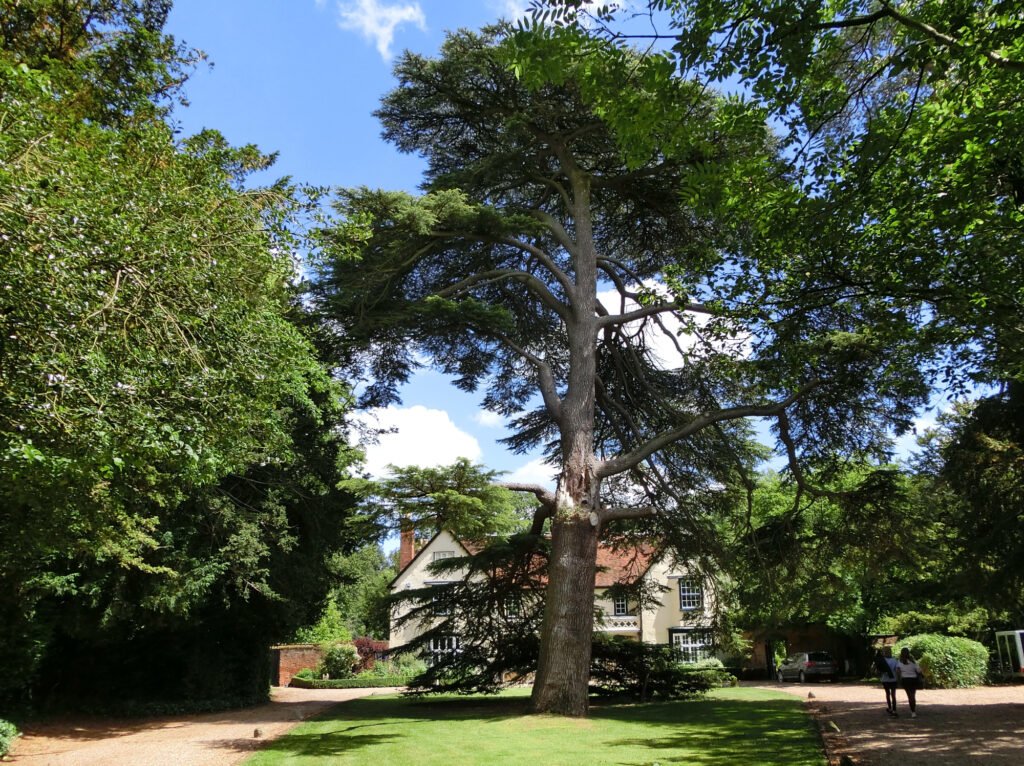
Much Hadham – Cedar at The Old Rectory
Last year’s Royal Horticultural Society’s State of Gardening Report revealed that gardens cover three times the size of the UK’s National Nature Reserves. They support over 50 million trees and thousands of species, providing habitats for over half of the UK’s butterflies, amphibians and reptiles, and more than 40% of birds.
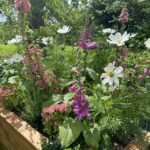
Many of the listed buildings within the Hundred Parishes are surrounded by a private garden which enhances their setting, reinforcing their sense of place. They support a great variety of trees, shrubs and flowers – some native, others introduced – providing havens for assorted wildlife.
Gardens associated with such older properties will have been tended by many generations of residents, evolving over time as owners were influenced by fashionable trends.
Initially, they were stocked with native trees and shrubs, selected for their ability to provide fuel, timber, fence posts or fruits, while vegetables helped feed the family.
From the mid-17th century onwards, non-native tree species began to appear such as Cedars and Horse Chestnuts, these being planted initially within the estates of trend-setting wealthy landowners. By the mid-19th century, gardeners were able to source an increasing number of exotic species as diligent plant hunters discovered them in various parts of the globe and the precious seeds or small saplings were grown on in nurseries and then released for sale.
Engaging with a garden improves mental, physical and social wellbeing, with 77% of gardeners reporting positive impacts on their mental health. Local residents have access to wonderful, extensive gardens such as Easton Lodge, Audley End House or Saffron Walden’s Bridge End Gardens, but enjoying a private garden brings a great deal of pleasure too.
Our website www.hundredparishes.org.uk includes an Article on Gardens and the What’s On page shows dates of specific local open gardens.
For further information please see www.hundredparishes.org.uk