By Ken McDonald, Secretary
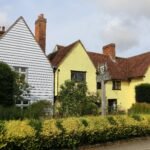
The walk descriptions that can be downloaded from The Hundred Parishes website refer to many interesting buildings along each route.
Some of the larger and more ancient homes are described as hall houses, having been constructed as a communal hall with one or two wings at the side. The hall would have been heated by a log fire in the centre of the room, its smoke drifting upwards through vents in the roof.
The hall house design fell out of favour, mainly during the period 1550 to 1650 AD, when it became fashionable to install a fireplace against a wall, complete with a flue or chimney which took away the smoke and also provided an upward draft to encourage the fire to burn.
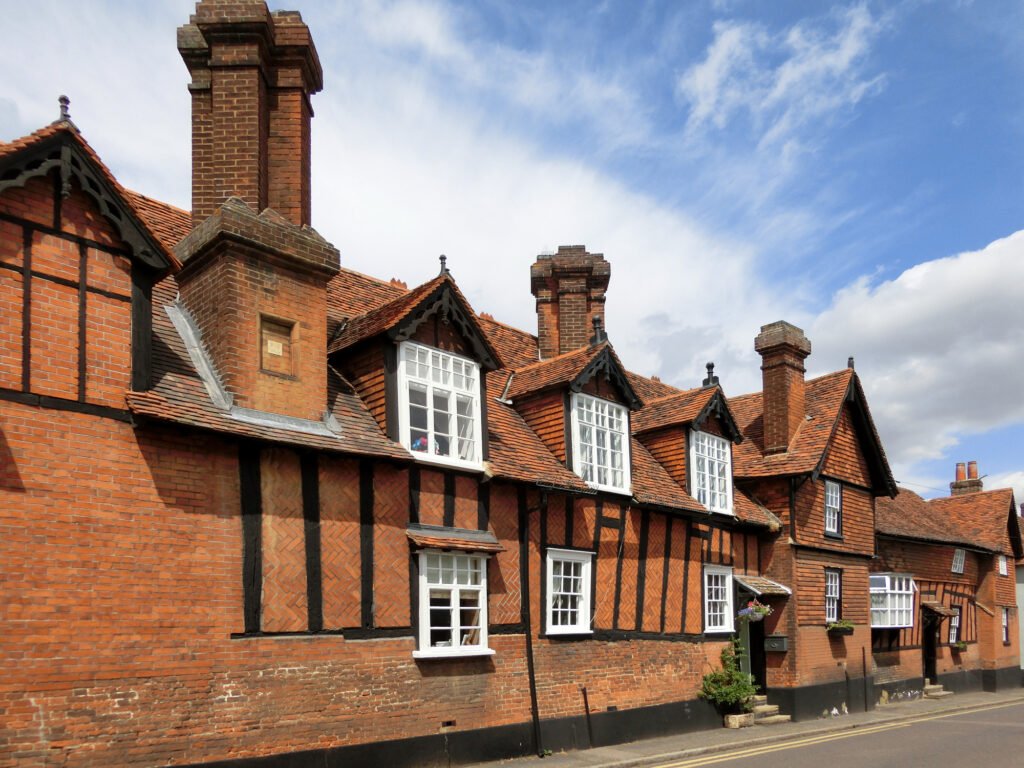
Where the flue or chimney breached the roofline, it often continued upwards as a chimney pot. In grander houses, these became fashionable accessories and a good number survive today.
During the 19th century, more and more houses had fires and now they tended to be fuelled by coal. Chimneys became narrower and their pots were less ornate. Fireplaces would be installed in multiple rooms, so houses might have several chimneys.
From mid-20th century, open fires were largely replaced by various forms of central heating and chimney pots are not usually required on new houses. Older pots are sometimes removed before they need maintenance.
You are encouraged to look up at our surviving chimney pots, especially those from long ago. Here are some of the wonderful local examples: Badynghams at Great Waltham; Tudor House in Newport; Cable Cottage in Puckeridge; Brook House at North End, Felsted and Stansted Hall in Stansted Mountfitchet. Not so easy to find, but on various walk routes: Moyns Park in Steeple Bumpstead, Broadoaks in Wimbish, and Dynes Cottage in Finchingfied. Happy spotting!
For further information please see www.hundredparishes.org.uk