
Photo credit, and reproduced with kind permission, JohnArgent Productions
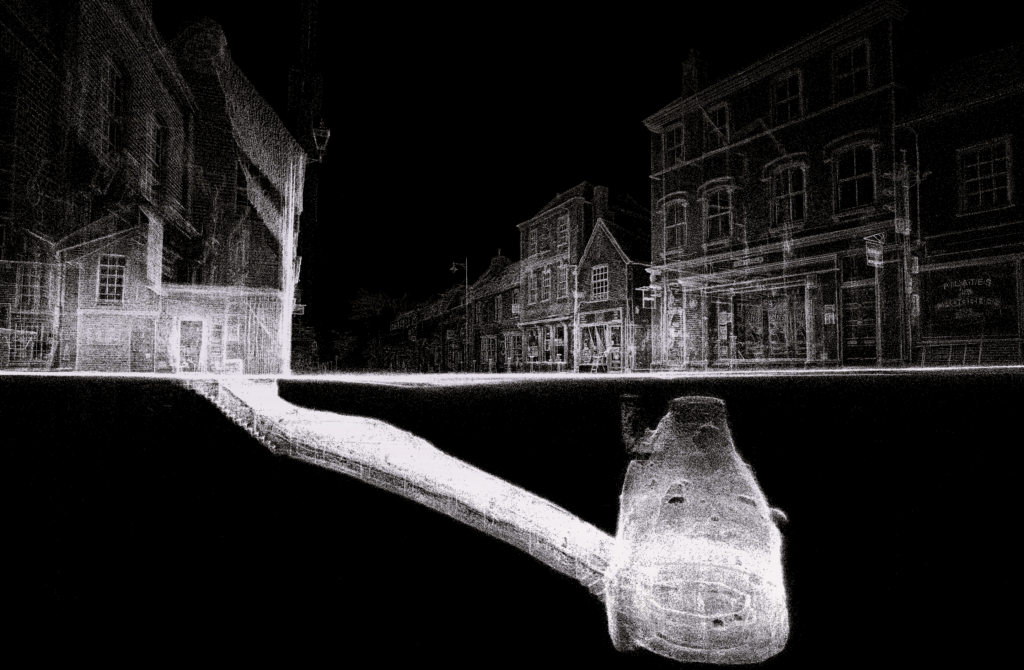
Royston Cave was discovered by accident in 1742 by workmen erecting a bench in the market above.
A millstone was found in the ground which, when lifted, uncovered a vertical, well-like shaft which led to a man-made and beehive shaped cave.
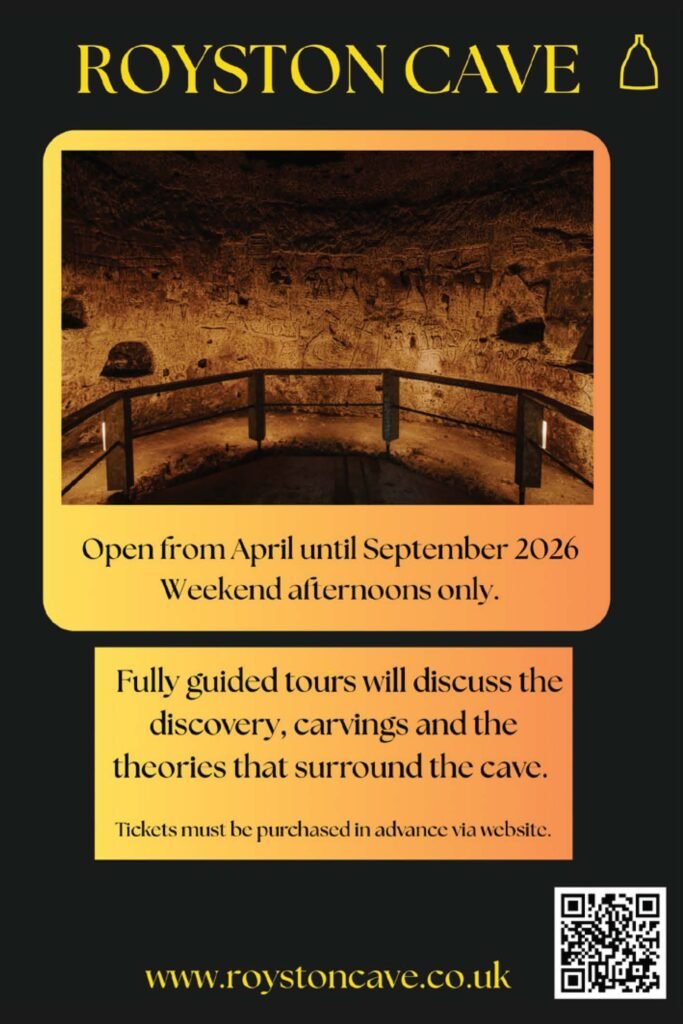
Royston Cave remains an enigma. No records of its age or purpose exist. Its origin has baffled visitors and historians alike for centuries. The walls are decorated with extensive low relief wall carvings which are mostly Christian in depiction and medieval in style.
Some suggest Royston Cave was a wayside hermitage, the subterranean home of a religious recluse. It was common for hermitages to be established by the side of roads, so Royston Cave’s proximity to the ancient crossroads of Ermine Street and Icknield Way may not be a coincidence.
Another popular theory is that it was used by Knights Templar. They would regularly visit Royston to sell produce at its market, so it’s possible they used the Cave as a secret place of worship.
King James I’s involvement with Freemasonry has long been disputed but some argue that he helped establish it in England. With James owning a large palace in Royston, it has been suggested the King used the Cave as a Masonic lodge.
Public tours run from April until September, every weekend afternoon. Please visit our website for further details, and to purchase tickets. www.roystoncave.co.uk